Personality Tests & IQ Test
- 4.2
- Rating
- 1.00M
- Installs
- Free
- Price

 Analysis by App-foxy
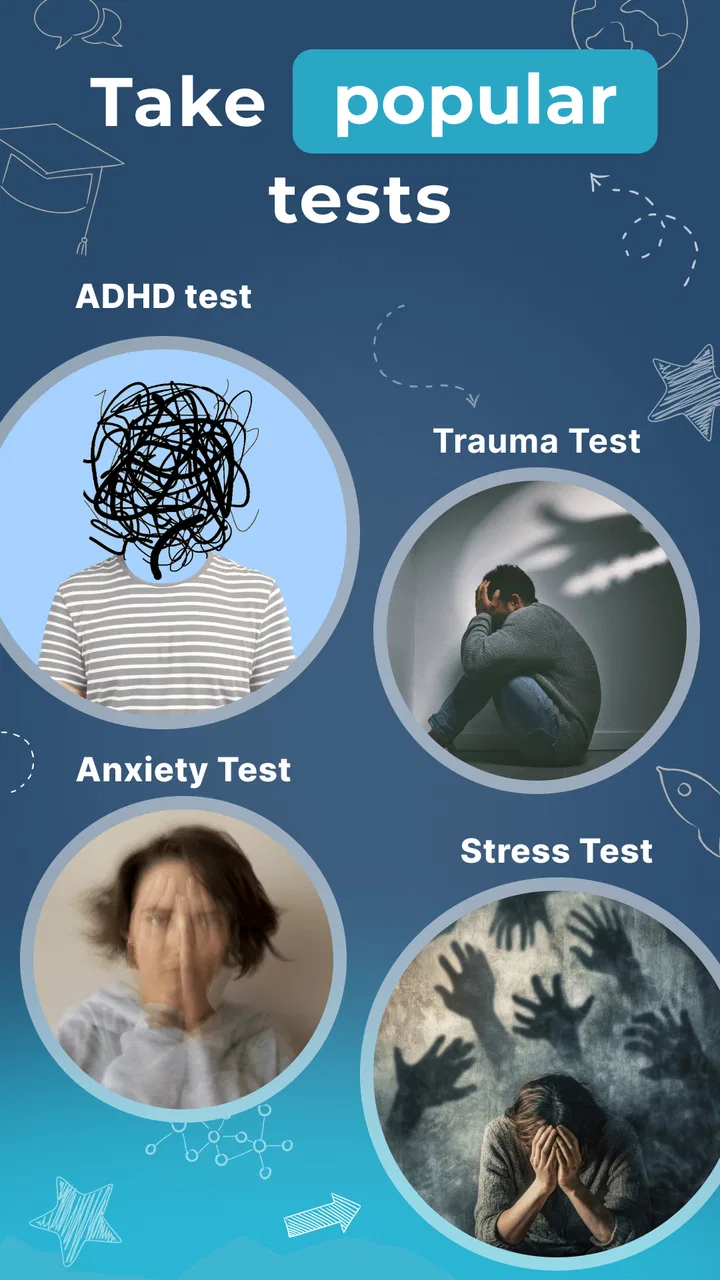
I approached Personality Tests & IQ Test as a quick self-reflection tool rather than a clinical resource. The app, developed by DevSect, sits in the education category and focuses on personality questions and psychological-style tests. Its central appeal is simple: answer a set of prompts, read the resulting interpretation, and use it as a starting point for thinking about your habits, preferences, and possible concerns.
That sounds modest, but it is exactly where the app makes the most sense. I would not use it to diagnose myself or make an important health decision. I would use it when I want a structured way to examine how I react to situations, compare my answers with a friend, or turn vague curiosity into a more focused conversation. The experience is easy to understand, and the free entry point makes it approachable for casual users.
How the testing experience feels in everyday use
I find the most useful way to approach these tests is to decide beforehand what I want to learn, then treat the result as a prompt rather than a verdict. That small pause can keep curiosity from turning into overinterpretation, especially when a question touches on a personal worry. It also makes the next question worth considering: what choices and boundaries can I check before sharing anything sensitive?
You May Also Like

 Blood Strike: 2.5 Anniversary
Blood Strike’s Loadouts Turn Every Drop Into a Tactical Gamble
A close look at Blood Strike’s custom loadouts: how fast access to signature weapons reshapes its battle royale rhythm, rewards preparation, and narrows the gap between fights.

 Pandora - Music & Podcasts
Pandora’s Music Is Easy to Start, but Harder to Recover
Pandora’s strength is its low-effort path from a seed to a station. Its weak spot is how much confidence it asks you to place in connection, setup, and quiet recovery.

 8 Ball Pool
 Is Built on Rivalries, Rematches, and Routine
A close look at the rivalries, rematches, shared routines, and unanswered safety questions that turn a quick pool match into a persistent mobile community.

 Samsung Music
’s Quiet Strength Is Playing What You Already Own
Its reach comes less from spectacle than from dependable access to a personal library. That simplicity is both the app’s strongest retention engine and its ceiling.

 AccuWeather: Weather Radar
AccuWeather Review: A Quick, Clear Forecast for Everyday Decisions
For everyday plans, the best forecast is the one you can understand quickly. AccuWeather makes rain timing, radar, and local conditions easy to act on, with a few trade-offs.

 Hill Climb Racing
Why Hill Climb Racing Still Turns Crashes Into One More Run
A tiny car, a bumpy hill and one more upgrade: Hill Climb Racing keeps resurfacing because its simple chaos makes every near-miss feel personal.
More From Our News Desk



A quick start with a clear purpose
The first thing I noticed is that the app does not require much preparation. You can open it with a specific question in mind, such as whether your usual reactions reflect a certain personality tendency, or simply browse the available testing approach out of curiosity. That low barrier is useful for people who dislike complicated educational apps and want to get to the questions without setting up a long-term learning plan.
The store describes it as a way to find out what psychological problems you may have, but I think that wording needs careful handling. A result from a mobile test should be treated as an informal indication, not a diagnosis. The questions can encourage self-awareness, yet they cannot replace a qualified professional who considers your history, circumstances, and day-to-day functioning.
For me, the best mindset is to answer honestly rather than trying to produce an attractive personality profile. If I choose what sounds flattering, the result becomes little more than entertainment. If I answer based on what I usually do, especially when tired or under pressure, the outcome has a better chance of giving me something useful to reflect on.
Speed expectations and the value of short sessions
The app is designed around individual tests, so it feels better suited to short sessions than continuous use. I would open it during a quiet break, complete a test without rushing, and then spend a few minutes considering whether the interpretation actually matches my experience. That rhythm is more productive than repeatedly taking tests in search of a more exciting result.
Because the app is built around questions and results rather than a demanding visual environment, I would expect the basic interaction to feel relatively light on a compatible phone. The more important factor is not raw speed but concentration. A rushed answer can change the meaning of the final result far more than a brief pause while moving between screens.
My practical tip is to avoid taking a test while multitasking. If I am answering messages, commuting through a noisy station, or trying to finish work at the same time, I am likely to select the first response that seems close enough. A calm five-minute window gives the app a fairer chance to be useful, even if the whole session itself is not long.
What happens during heavier use
Heavy use here does not mean rendering complex graphics or processing large files. It means taking several tests in one sitting, revisiting interpretations, and possibly comparing answers over time. That is where the app’s limits become more noticeable conceptually: more results do not automatically mean more accuracy.
If I took multiple tests back to back, I would keep notes about the questions that felt genuinely relevant and those that seemed too broad. This simple habit helps separate a meaningful pattern from the effect of mood. For example, a stressful day may make several answers lean in the same direction, while a calmer session may produce a different picture. The app can prompt this comparison, but I would not treat every variation as a major change in personality.
Another useful workflow is to take one test, leave the result alone for a day, and then return to it with a practical example. If the result suggests that I avoid difficult conversations, I can ask myself whether that happened recently and what I actually did. This turns the app from a passive result generator into a small reflection exercise.
Stability and recovery in real situations
For an app like this, reliability is not only about whether a screen opens. It is also about whether I can complete a test without losing my place and whether the result remains understandable after I leave and return. I would pay close attention to those moments because a lost answer can influence the final interpretation, especially when the questionnaire is long enough for me to forget earlier choices.
My advice is to avoid closing the app in the middle of a test unless necessary. If a phone call, notification, or low-battery warning interrupts the session, I would reopen the app and check whether the current test is still available before assuming that progress was preserved. I cannot promise identical recovery behavior on every device, so this is one area where a cautious workflow is sensible.
The same applies after an unexpected interruption. Rather than immediately repeating the entire test, I would first look for the existing result or continue from the last visible question. Repeating answers from memory can introduce a new bias, particularly if I am now thinking about the outcome I hope to receive.
Device constraints and practical compatibility
The listed minimum operating system is Android 7.0, which makes the app accessible to many older Android phones as well as newer models. That is helpful if you keep a reliable older device for basic tasks. Still, operating-system compatibility does not guarantee the same experience everywhere. Screen size, available storage, background apps, and the phone’s general condition can all affect how comfortable a questionnaire feels.
I would be especially careful on a small display or a phone with an unreliable touch screen. Personality questions often depend on selecting the response that best matches your view, so accidental taps can undermine the exercise. A stable connection and enough battery are also sensible precautions before starting, particularly if you want to finish a complete test without interruption.
Resource demands should be modest compared with games, video editors, or large social platforms because the app’s purpose is question-based education and self-assessment. Even so, an older phone with many apps running in the background may feel less responsive than a newer device. Closing unnecessary apps can make the session more comfortable, but I would not expect that to transform the nature of the experience.
Where the app is genuinely useful
The strongest use case is guided self-reflection. If I know I have been reacting defensively at work, struggling to make decisions, or avoiding social situations, a structured questionnaire can help me describe the issue more clearly. It does not solve the problem, but it can give me vocabulary for discussing it with someone I trust.
It can also work as a conversation starter between friends or partners, provided everyone understands that the results are not labels. Comparing answers can reveal different ways of interpreting the same situation. The valuable part is the discussion afterward: why did one person choose a certain response, and what experience shaped that choice?
Students and curious learners may appreciate the educational angle, especially if they enjoy personality frameworks and informal IQ-style challenges. The app’s Everyone content rating also makes it broadly approachable from an age-classification standpoint. That does not mean every result is equally suitable for every emotional situation, though. A younger user who is worried about a serious mental-health concern should involve a trusted adult or qualified professional instead of relying on an app result.
Where I would choose something else
I would skip this app if I needed a validated clinical assessment, a treatment plan, or a professional interpretation. A psychologist, doctor, or counselor can ask follow-up questions and account for context in a way a fixed mobile questionnaire cannot. The app is not the right tool for deciding whether someone has a disorder or for judging another person’s mental health.
I would also look elsewhere if my main goal were formal IQ measurement. An informal IQ-style test can be entertaining and may encourage concentration, but it should not be confused with a supervised assessment. For serious educational or occupational decisions, a recognized professional evaluation is the safer route.
Compared with a paper quiz, the app is more convenient because it places the questions and interpretation together in one mobile experience. Compared with a full educational course, however, it offers less depth and less opportunity to build a skill through lessons and practice. Compared with a search engine, it gives a more organized path, but the result still needs personal judgment rather than blind acceptance.
Free access, upgrades, and expectations
The app is free to download, which makes it easy to try before deciding whether it belongs in your routine. It also includes in-app purchases ranging from around four dollars to around one hundred dollars per item. That is a wide range, so I would read each purchase screen carefully and avoid assuming that every test or interpretation is included in the free experience.
My approach would be to use the free portion first and decide whether the questions feel thoughtful enough to justify spending anything. I would not pay simply because a result sounds more serious or because the app suggests that an additional test might reveal something important. A purchase should provide a clear, practical benefit for your own use, not pressure you into chasing certainty that the format cannot deliver.
This is also where the app differs from free articles and printed questionnaires. It may be more convenient to have a dedicated place for tests, but convenience alone does not make a result more scientifically reliable. If you are considering an upgrade, ask whether you want more structured reflection or whether you are hoping the next result will settle an anxiety. In the second case, professional advice is likely to be more useful.
What the audience response tells me
The app has an average rating of 4.2 from around twenty-four thousand ratings, with around two thousand four hundred written reviews, and it has passed one million installs. Those figures suggest that the concept has reached a substantial audience and that many people find the format appealing enough to try. They do not prove that every test is accurate or that every user will have the same experience.
I read that level of adoption as a sign of accessibility rather than clinical authority. People are clearly interested in quick personality and psychological-style tests, but popularity should not change how cautiously I interpret the results. The app works best when its audience treats it as a prompt for reflection and not as a final answer about identity or mental health.
Version, age rating, and long-term expectations
The current version is 2.01, and the app was released on July 2, 2021. Those details matter mainly because they place the product in the context of an established mobile app rather than a brand-new experiment. I would still keep expectations realistic: an established version can be convenient, but it does not remove the need to check how the app behaves on your particular phone.
The Everyone content rating makes it suitable for a broad audience in terms of store classification. Even with that rating, the subject matter can feel personal. Questions about anxiety, habits, or possible psychological problems may make some users uncomfortable, especially if they are already worried. I would take a break if a result increases distress and speak with a qualified person when the concern feels serious or persistent.
My performance verdict
From a performance perspective, I see this as a light, focused app rather than a resource-heavy one. Its success depends less on demanding hardware and more on whether the test flow stays clear, whether interruptions are handled smoothly, and whether the interpretations feel useful instead of overly definitive. On a compatible Android phone, it should fit naturally into short sessions, while older or crowded devices may benefit from closing background apps first.
The most important performance trade-off is mental rather than technical. The app makes it easy to move quickly from question to result, but thoughtful answers require slowing down. If you treat it like a rapid-fire quiz, you may get a fast experience with little lasting value. If you give each question honest attention and connect the outcome to real examples, the same short session can become a useful self-check.
I recommend trying it if you enjoy personality tests, want a convenient reflection tool, or need a simple way to start a conversation about personal habits. I would not recommend using it as a diagnosis, a substitute for counseling, or a formal IQ assessment. Its real strength is turning vague curiosity into a structured moment of self-reflection, not delivering a definitive judgment about who you are.
Overall, Personality Tests & IQ Test is worth exploring for casual and educational use, especially because the basic download is free and the experience is easy to approach. Keep your answers honest, pause before accepting a result as fact, and be cautious with optional purchases. Used with those boundaries, it can be a practical little companion for thinking about your behavior; used without them, it risks making a simple questionnaire sound more authoritative than it really is.
FAQs for Personality Tests & IQ Test
01What features does the Personality Tests & IQ Test app offer?
The Personality Tests & IQ Test app provides a comprehensive suite of tests that include personality assessments, IQ tests, and various quizzes designed to evaluate emotional intelligence and cognitive abilities. Users can track their progress, compare results with friends, and receive personalized insights. The app also offers educational resources to help users understand their results.
02How accurate and reliable are the test results?
The app is developed using scientifically-backed methodologies and is designed by experts in psychology and cognitive science. While the tests offer valuable insights, they should not be used as a substitute for professional psychological evaluation. The results are indicative and meant to provide a general understanding rather than a definitive diagnosis.
03Is the app free to use or does it require a subscription?
The Personality Tests & IQ Test app offers a free version with basic features. However, to access advanced tests, detailed reports, and personalized insights, a premium subscription is required. The subscription options are flexible, allowing users to choose monthly or yearly plans based on their needs.
04How does the app ensure user privacy and data security?
User privacy and data security are top priorities for the app. It uses advanced encryption protocols to protect personal data. The app complies with international data protection regulations and does not share user information with third parties without explicit consent. Users have control over their data, with options to delete their information at any time.
05Can the app be used offline, or does it require an internet connection?
The app requires an internet connection for downloading tests and receiving updates. However, once the tests are downloaded, they can be completed offline. Users will need to reconnect to upload their results and access personalized insights. This flexibility allows users to take tests at their convenience without continuous internet access.
Pros
- Easy-to-use interface for all users.
- Provides instant results and feedback.
- Wide variety of tests available.
- Helps identify strengths and weaknesses.
- Engaging design keeps users interested.
Cons
- Some tests may lack scientific backing.
- Requires in-app purchases for full access.
- Advertisements can be intrusive.
- Limited customization options.
- Results may vary in accuracy.

Personality Tests & IQ Test
Gallery